IT´S CHRISTMAS TIME!!
Merry Christmas and a Happy New Year! :)
Christmas is one of the favorite time for almost all children; they have time to enjoy the company of their family and loves one; they get very excited to have ready the list for Santa; they have time to play with their new toys and enjoy the great decorations that all the houses and buildings have on.
How Christmas Started? A learning video for kids
CHRISTMAS SONGS :)
Christmas Time is here
Rudolf The Red Nosed Reindeer
I am a little snowman short and round
Santa Claus is coming to town
CHRISTMAS ACTIVITIES TO DO AT HOME WITH CHILDREN. ART AND CRAFT
Winter Season, Winter Animals, Books and Activities about winter and animals.
WINTER SEASON
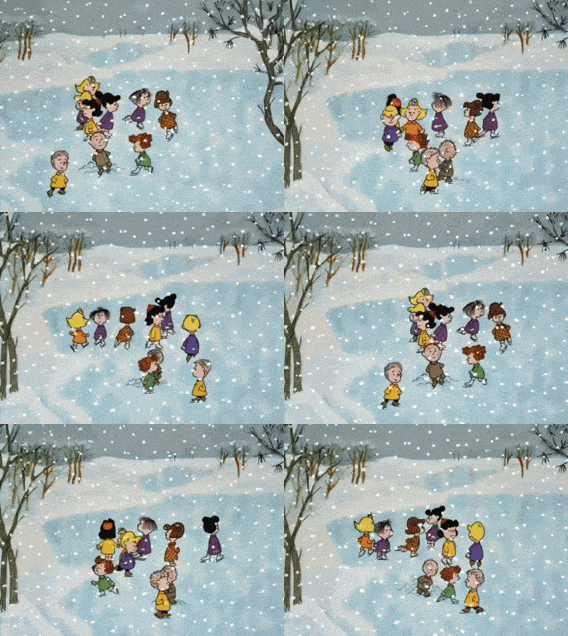
- Winter starts on the first of December and continues untill the end of January. Winter is one of the four seasons and the coldest time of the year. The days are shorter and the nights are longer. Winter comes after autumn and before spring.
- Some animals hibernate during this season. In temperate climates there are no leaves in some trees. People weare warm clothing and eat food that was grown earlier. Many places have snow in winter and some people use sleds or skis.
Snowflakes. Video for kids about Snowflakes 😃
Songs about winter 😊 Let´s sing! "Five little snowman standing in a row"
Winter Hockey Pokey Song!
Ey Guys! Let´s see what´s the weather like today! I am sure you all remember this song from Circle Time😊! Now its really cold as we are in Winter!
Shhh! It´s time for story time! 😃 "Winter is Here"
Activity 1: Snowman using paper and glue 😀 Let´s have some fun!
Activity 2: Winter Tree Finger Painting
Activity 3: Winter Art and Craft. Winter hat
WINTER ANIMALS
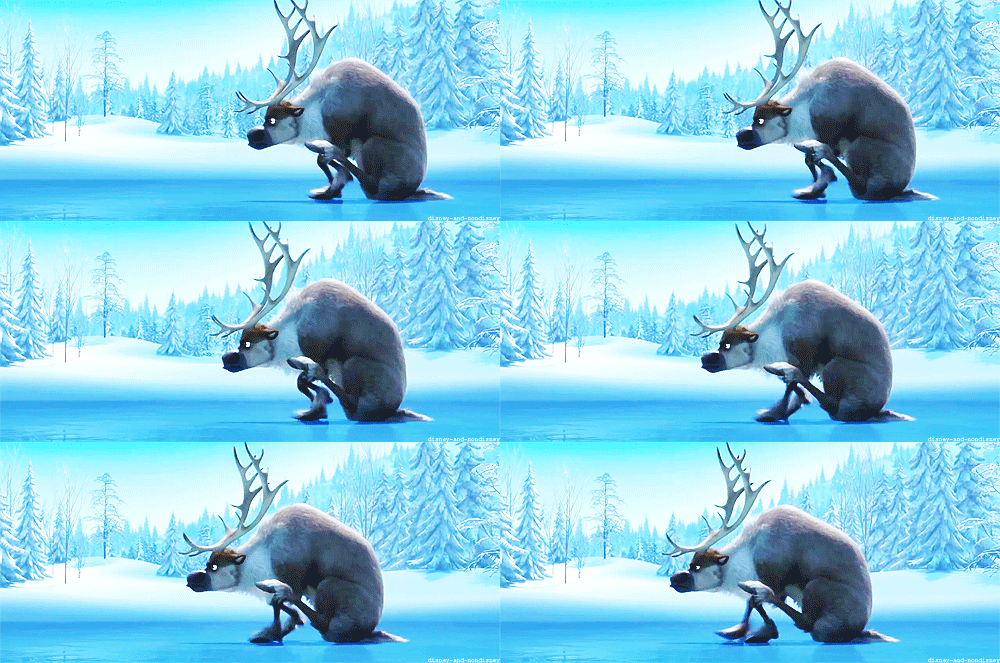
It can be difficult for animals to live in places that receive large amount of snow, such as in the high latitudes and at high elevations. Snowy places tend to receive less sunlight, which decreases temperatures and makes it hard for animals to stay warm. Deep snow can also be difficult to move around in; animals must spend more time and energy walking through it or finding food beneath it.

Some animals have adapted to co-exist with the cold, Deer, elk, bison, Penguins, Alatrosses, Foxes, those animals that lives in the low temperatures places. To help retain warmth throughout the winter, they grow thicker, shaggier coats, which they shed in the spring when the weather becomes warm again.
Interesting acts about Arctic Animals
Penguins!!!!! 😀😀 Let´s learn about Penguins!!
Winter Animals Sounds 😃
Song: "Paw Paw Paw Polar Bear" 😎
Book: " The Polar Bear is Hungry"
Book: " Animals in winter"
Book: "If you were a Penguin"
Activity 1: "Arctic Fox using paper plates!"
Activity 2: "Polar Bear Hand Print"
Hibernation
Deep snow can prevent some animals from finding food, but it also acts likr a blanket, keeping the ground beneath it warmer than the surrounding air temperature. Some animals take advantage of snow´s insulation, and cope with the cold season by building in a protective den or burrow and going into a deep, long sleep, a process called hibernation.

Bears and groundhogs, for instance, build up fat reserves in the fall so they can survive hibernating through the snowy winter months, usually not waking again until spring.
Video for kids about Hibernation
Hibernate Song 😃
Migration
Some animals simply leave snowy, cold regions during the toughest seasons. Arctic terns, for example spend the Northern Hemisphere summer in the Arctic, and then migrate to Antartica for the Southern Hemisphere summer.

Migration can also happen over the shorter distances; Deer and elk in the Rocky Mountains of the United States tend to migrate down into valleys during the winter.
Migration video for kids
Migration song. Let´s sing!
WEEK 2: Recycling, Messy Play and Science and Experiments
RECYCLING!

We all have to do our bit for the environment with the growing effect of Global Warming. It is very important to educate people especially children about the benefits of recycling forboth them and the enviroment.
- Recycling helps save natural resources.
- Recycling helps save energy.
- Recycling helps to reduce the size of landfills.
- Recycling helps create jobs and save money.
- Recycling prevents loss of biodiversity.
- Recycling saves clean air and water.
- Recycling helps reduce greenhouse gas emissions.
Recycle!! Learning about Recycling! 😀
Let´s sing! Recycling song 😃
3 Activities with Recycling materials
Science and Experiments
Sensory Activity
WEEK 3: Nature, Butterfly and Frog Life Cycle, Volcanos, Messy Play with water
NATURE
The words nature and natural are used for all the things that are normally not made by humans. Things like weather, organisms, landforms... Scientists study the way the parts of nature work.
Let´s sing!! This is Nature😍
Nature Walk Song
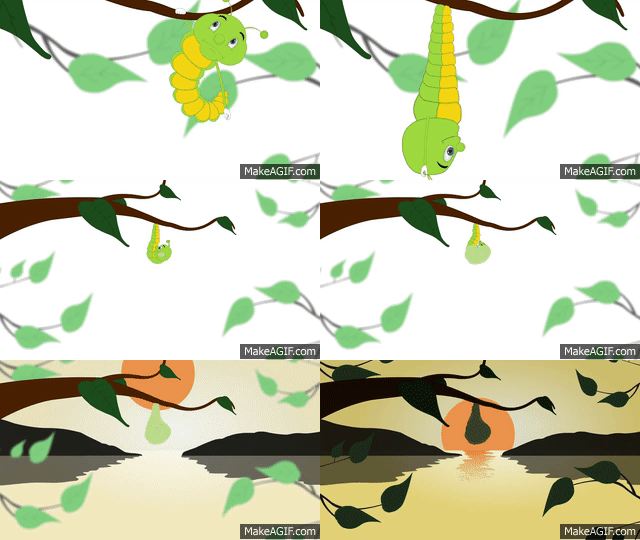
BUTTERFLY LIFE CYCLE
We all love butterflies for their beautiful, brightly -coloured wings. But did you know that these fab flyers begin life as something completely different? As they grow, they undergo one seriously terrific transformation - a process known as "metarmorphosis".
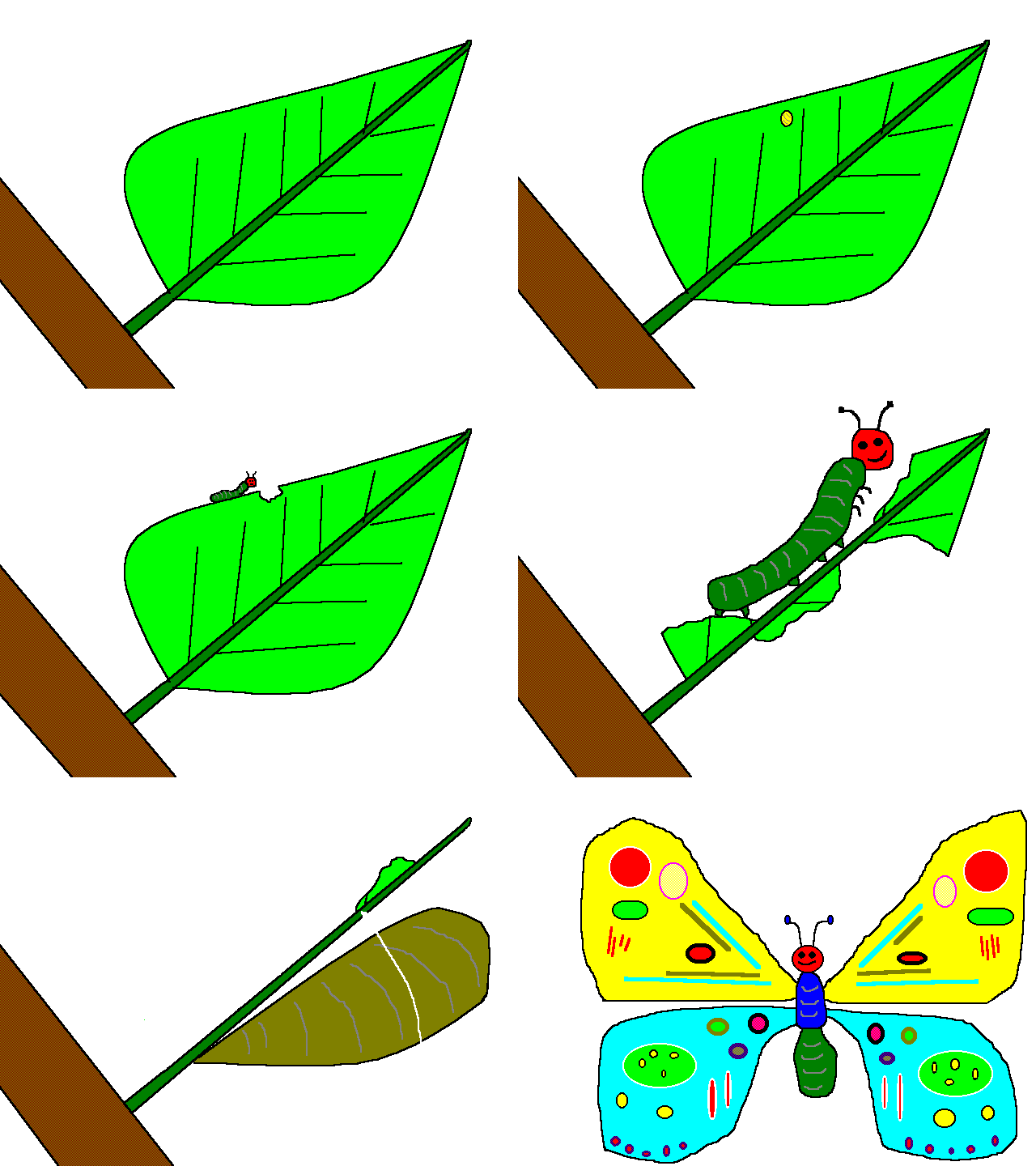

Stage 2: the caterpillar. Once ready, the caterpillar leaves its egg home and enters the big outside world! And these little critters have one serious appetite - they actually eat their way out of the egg and inmediately start chomping on the leaves of the host plant. During this stage, they shed their skin four or five times - as the caterpillar grows, its skin becomes too tight and splits open, revealing a new larger skin undernearth. A fully grown caterpillar can be over 100 times larger than when it emerged from its egg. wow!!!!

Stage 3: the pupa. Once fully grown, the caterpillar forms itself into a "pupa", a kind of vessel in which the caterpillar changes into a butterfly. They usually do this on twigs or safe, hidden areas around the host plant.

Stage 4: the butterfly. Once the buuterfly is ready to emerge, the case around the pupa splits open. But it´s not time for take off just yet, as the wings are at first wet, soft and wrinkled againts its body. The butterfly waits for its wings to dry. Once fit for flight, this brilliant bug then takes to the air in search for flowers to feed on and for other butterflies to mate with.

Life Cycle of a Butterfly. Explination for kids
Butterfly Dance song
Song: Fly Fly Fly the Butterfly
Yoga: Fly like a Butterfly
Book: " The very Hungry Cattrpillar"
Activity 1: How to make a catterpillar
Activity 2: The Butterfly Life Cycle made with paper plate and food/fruit

FROG LIFE CYCLE
Frogs are animals that form part of Amphibians class. That means that they can live in water or on land. The life cycle of a frog goes through four stages of life.
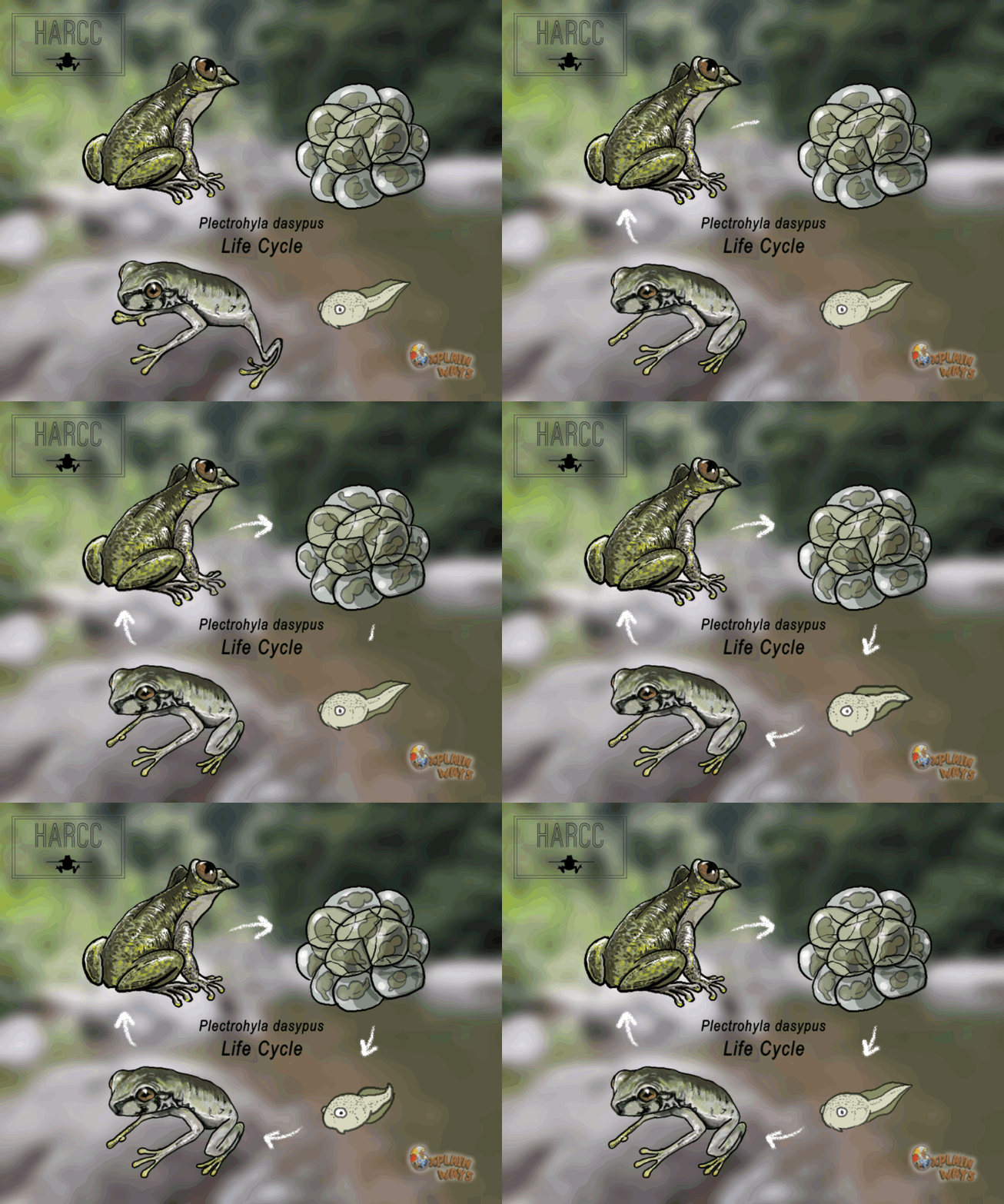
Stage 1: the egg. The egg is the first phase of the life cycle of a frog. A female frog lays a lot of egg usually in or near water. Eggs are covered in jelly like substance which make them slippery. The jelly protects them from other animals eating the eggs. Now the eggs are ready to hatch into tadpoles.

Stage 2: Tadpole. The tadpole is the second phase of a frog´s life cycle. Tadpoles hatch from eggs. When the tadpoles is disgusted, it does not look exacly like a frog, but rather like a fish. Tadpole has no legs, at this point of its life cycle. It breathes using gills and moves like a fish. It uses its long tail to swim. They eat small water plants and algae. In this stage, the tadpole begins to have two hind legs and has a long body along with its head. With the help of the two hind legs it can easily jump around instead of just swimming.

Stage 3: Froglet. In this stage the lungs and two front legs also grow. Its long tail becomes shorter and shorter. Due to the lungs, the froglet also floats above the water to breathe air.

Stage 4: Adult Frog. Now it is perfectly fit to leave the water and live on the land. The frog´s tail desappears completely and insects and insects also start eating.

Video about the Life Cycle of a frog for kids😏
Five little specked frogs song
Book: "I don´t want to be a frog"
Activity: A frog with paper
VOLCANOS
Avolcano is formed when hot molten rock, ash and gases escape from an opening in the Earth´s surface. The molten rock and ash solidify as they cool, forming the distinctive volcano shape shown here. As a volcano erupts, it spills lava that flows downslope.

Let´s learn about Volvanos!!! Video for kids😋
Song. I am a volcano!
Volcano song
Experiment you can do at home with your child. Erupting Volcano 🙉
Volcano experiment with sand🙊
MESSY PLAY
Activities with water
THE SAVANNA
The Savanna forms part of Africa. It is a tropical grassland with warm temperatures year-round and with its highest seasonal rainfall in the summer. One of the more spectacular sights in nature is the animals of the African Savanna. Because the savanna is so rich in grasses and gtree life, many large herbivores (plant eaters) live here and congregate in large herds. These include zebras, wildebeests, elephants, giraffes, ostriches, gazelles and buffalo. There are many powerful predators too roaming the savanna including lions, hyenas, cheetahs, leopards, black mambas and wild dogs.

Animals of the Savanna
Song: This is the Savanna
Book: " Over in The Grassland"
Activity 1: How to make a Lion using a fork
Activity 2: Handprint, Elephant!! 😃
Activity 3: Paper cut Giraffe
I hope you enjoyed all the videos, songs, books and activities.I hope see you all very soon!!! 😀 Big HUG!!!
IRENE 😀


No comments:
Post a Comment